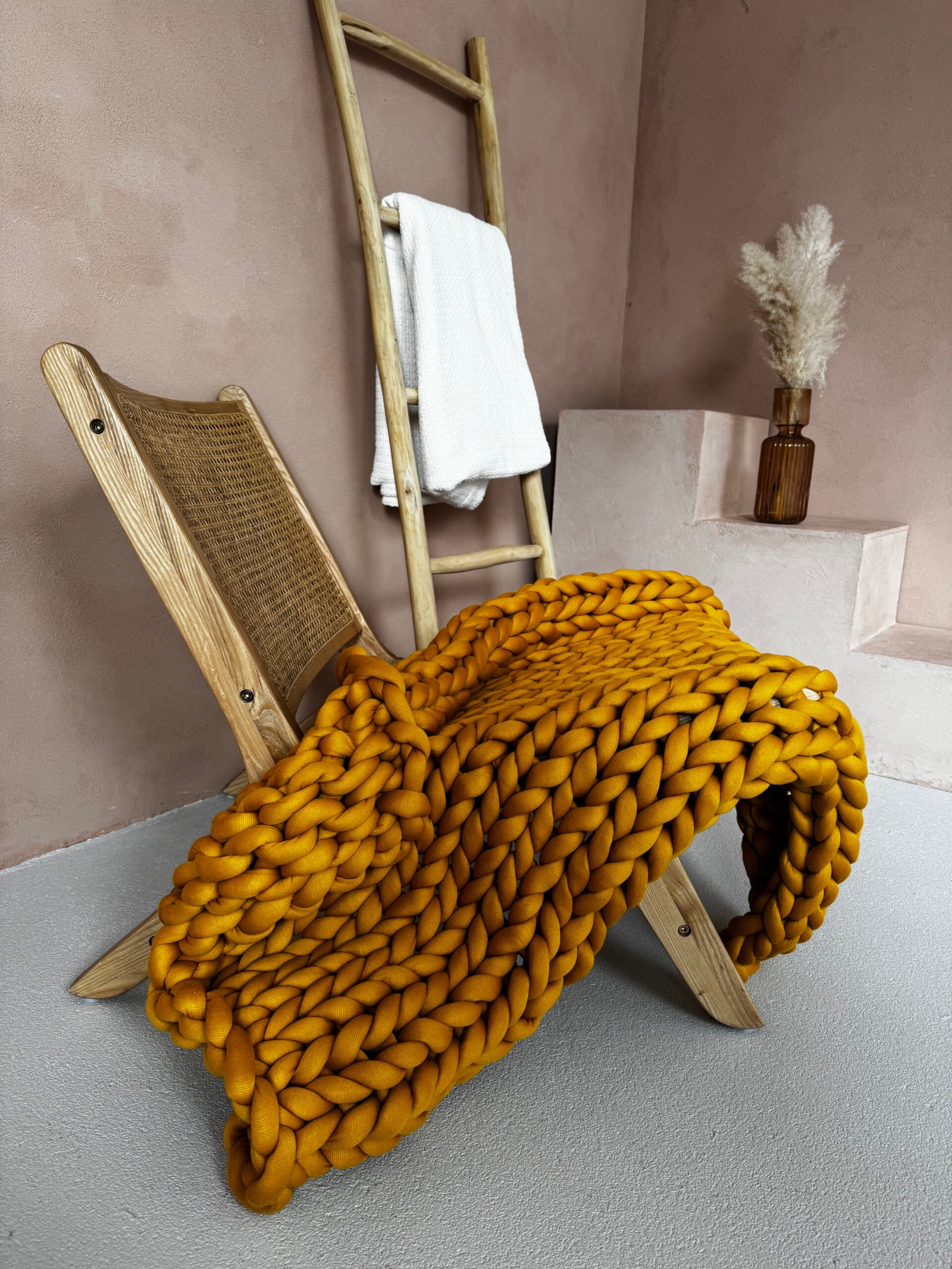
Chunky knit blankets have a distinct way of transforming a space. Their oversized stitches add warmth, texture, and a quiet sense of calm that feels both modern and timeless. For many home knitters exploring chunky blanket yarn, the appeal goes beyond the finished blanket.
Yet while the idea of making a chunky blanket is simple, the process often proves more challenging than expected. One of the most common points of frustration is yarn choice. Many knitters start with enthusiasm, only to find that the yarn they selected does not behave as hoped. Stitches may appear flat instead of bold, the material can feel slippery or synthetic, and hands may tire quickly, causing projects to stall before completion.
The reality is that not all yarn sold for blankets is suitable for chunky knitting, especially when working by hand. Thickness alone is not enough. Structure, consistency, and tactile comfort all play a critical role in how a blanket looks, feels, and holds its shape over time. Choosing the right chunky blanket yarn early on can prevent wasted time, unnecessary frustration, and unfinished projects. This guide explains what to look for and how purpose-made yarn can quietly support better results from the very first stitch.
Essential Qualities of Good Chunky Blanket Yarn for hand knitting
At first glance, many yarns appear similar online. Labels frequently use terms like “bulky” or “chunky,” but these categories are broad and often unregulated. For large-scale blanket projects, the material must meet specific criteria to perform well.
A high-quality chunky blanket yarn should be:
- Substantial: Thick enough to create visible, sculptural stitches.
- Tactile: Soft and comfortable to handle for extended periods.
- Structured: Stable enough to hold its shape once knitted.
- Consistent: Uniform in diameter from start to finish.
When any of these elements are missing, issues arise. The blanket may stretch unevenly, lose definition, or feel harsh against the skin. Ultimately, the choice of yarn affects both the making process and the longevity of the finished piece.
Why Standard Yarns Often Fail for Large Projects
Many knitters assume that any yarn labelled “chunky” will suffice for a heavy blanket. Unfortunately, this misconception often leads to disappointment.
Insufficient Gauge for True Chunky Stitches
Some yarns marketed as chunky are closer to a standard super bulky weight. When used for hand knitting, they produce stitches that look loose, flat, or underwhelming. This typically results in:
- Blankets that lack visual impact and loft.
- Higher yarn consumption than anticipated.
- A finished piece that fails to match the aesthetic of inspiration photos.
Synthetic Texture and Discomfort
A significant number of blanket yarns rely heavily on low-quality synthetic fibers. While accessible, they often feel slick, squeaky, or stiff. Over time, this causes hand fatigue and reduces the meditative quality of knitting. Furthermore, a scratchy or plasticky texture makes the final blanket unpleasant to use.
Difficulty with Control
Inconsistent thickness, excessive elasticity, or slippery textures make it difficult to maintain even tension. Beginners are particularly affected, as they rely on consistent tactile feedback. This often leads to uneven edges, misshapen blankets, or abandonment of the project.
The Role of Yarn Texture and Weight
For chunky blanket yarn, thickness alone is insufficient; structure is equally vital. A well-structured yarn maintains its cylindrical shape when pulled, creating defined loops rather than collapsing. It must also support the weight of a large blanket without distorting.
If structure is lacking, stitches can stretch out significantly, a common issue in arm-knitted projects. The blanket may elongate, lose symmetry, or look worn after minimal use. Yarn designed specifically for this purpose balances softness with internal stability, ensuring the blanket remains comfortable while retaining its form.
Chunky Blanket Yarn requirements for hand and arm knitting
Hand knitting and arm knitting place unique demands on materials compared to traditional needle knitting. Without needles to regulate tension or compensate for inconsistencies, the yarn itself must perform reliably.
For these techniques, the yarn should:
- Glide smoothly without slipping uncontrollably.
- Respond predictably to changes in tension.
- Feel gentle against the hands and arms.
A yarn that works well on needles may behave quite differently when knitted by hand. Purpose-designed arm knitting yarn removes much of the guesswork, allowing knitters to focus on rhythm and flow rather than constant correction.
How Purpose-Made Yarn Improves the Experience
Yarn created specifically for blanket projects addresses common pain points effectively.
For example, StudioKnots Chunky Blanket Yarn designed for hand knitting is engineered with hand knitting and arm knitting in mind
Key characteristics include:
- Consistent Diameter: Ensures bold, even stitches throughout the piece.
- Soft Surface: Remains comfortable during long knitting sessions.
- Internal Structure: Holds shape without rigidity.
This combination allows stitches to appear full and defined while feeling relaxed in the hands. The knitting process becomes smoother, and the finished blanket maintains its integrity over time. Crucially, this type of material supports makers of all skill levels, offering beginners a more forgiving learning curve.
Selecting the Right Yarn: Practical Considerations
Before purchasing materials, consider the following practical factors to ensure your project’s success, especially when choosing hand knitting materials for large-scale blankets.
Consider the Blanket’s Purpose
- Will the blanket be a decorative accent or used daily?
- Does it need to withstand frequent washing?
- Will it be placed on a bed, sofa, or floor?
Heavily used items benefit from yarn that is durable and resistant to pilling or shedding.
Test the Tactile Feel
If possible, assess how the yarn feels when pulled and looped. Comfort is paramount for large projects where the material passes through your hands hundreds of times.
Check for Excessive Stretch
Yarns that stretch too easily may look appealing initially but often sag. A degree of gentle elasticity is desirable, but excessive stretch compromises the blanket’s structure.
Prioritize Consistency
While novelty textures can be interesting, consistency is what gives a large blanket a calm, intentional appearance rather than a chaotic one.
Common Pitfalls When Buying Giant Knitting Yarn
Many unfinished projects stem from similar oversights. Being aware of them can save time and resources.
- Relying solely on photos: Screen appearance does not always reflect texture or weight.
- Underestimating quantity: Large stitches consume yarn rapidly; ensure you calculate requirements accurately.
- Ignoring technique compatibility: Ensure the yarn is suited for hand knitting if that is your chosen method.
Taking the time to select the correct chunky blanket yarn is not a delay; it is a fundamental part of the craftsmanship.
The Connection Between Material and Process
Knitting a chunky blanket should be a steady, satisfying endeavor. Each stitch should build upon the last without the need for constant adjustment. When the yarn works in harmony with the knitter, the experience shifts from frustrating to meditative.
High-quality yarn encourages consistent tension, reduces strain on the hands, and makes progress visibly rewarding. This is particularly important for large blankets, where motivation can wane. A material that behaves predictably helps maintain momentum and confidence.
Conclusion
Choosing the right chunky blanket yarn is less about navigating labels and more about understanding how the material behaves in application. Thickness, structure, softness, and consistency all play essential roles, especially for hand knitting and arm knitting projects.
Many frustrations stem from using yarns never intended for blanket-scale work. When the material is too thin, uncomfortable, or inconsistent, the process becomes unnecessarily difficult.
Purpose-made options, such as StudioKnots Chunky Blanket Yarn, address these issues quietly, providing a balanced, dependable medium for both beginners and experienced makers. The result is a calmer knitting experience and a finished piece that feels as refined as it looks.
If you are planning a chunky knit project, investing time in understanding your yarn choice is one of the most valuable steps you can take. Thoughtful selection ensures your next blanket is one you will be proud to finish and use for years to come.